Commercial Moves in Chinatown: Practical, Local Moving Support for Busy Businesses
Reliable commercial moving help for Chinatown businesses

If you are planning commercial moves in Chinatown, you already know this is not the kind of area where a one-size-fits-all moving plan works. Streets can be narrow, loading spaces can be limited, and many buildings have shared entrances, elevators, or strict access rules. That is why local customers—whether they run a shop, office, clinic, studio, restaurant, or warehouse-connected operation—often look for a moving team that understands the pace and layout of the neighborhood.
Business relocation is about more than lifting boxes. It is about keeping your operations organized, protecting equipment, minimizing downtime, and making sure staff can get back to work quickly. A well-planned office move or shop relocation in Chinatown should account for busy foot traffic, delivery schedules, curb access, building management requirements, and the realities of moving in a dense urban district. When these details are handled properly, the process feels much smoother from start to finish.
Local customers usually want a service that is flexible, efficient, and careful with business assets. That may include moving desks, filing systems, retail stock, display fixtures, computers, POS equipment, kitchen items, shelving, or specialty tools. The right team should also be able to adjust around your business hours and help you move in stages if that is what your operation needs. Contact us today if you are planning a move and want a practical, business-first approach.
Why Chinatown businesses need a local moving team

Commercial relocations in Chinatown often involve more than just a short drive from one address to another. Many businesses operate in mixed-use buildings, older properties, or premises with limited loading bays and time-restricted access. A local team that knows the neighborhood can help reduce delays by planning around busy periods, confirming entry points, and understanding how to move items safely through tighter spaces.
For restaurants and food businesses, timing matters because equipment, packaging supplies, cold storage items, and service areas all need careful handling. For offices, the main concern may be data-sensitive equipment, document organization, and keeping teams productive during the transition. For retail stores, the challenge is often balancing stock movement, fixture removal, and reopening quickly without confusing customers. Each type of business has its own moving priorities, and Chinatown’s layout makes those details even more important.
Another reason local experience helps is parking and access. In busy commercial districts, trucks may need to wait for a loading window, coordinate with building staff, or work around pedestrian traffic and delivery vehicles. A mover familiar with Chinatown can plan for these limitations ahead of time instead of discovering them on moving day. That saves time, lowers stress, and helps protect your business schedule.
What local customers usually value most
When businesses request commercial moving services in Chinatown, they typically care about a few key things:
- Clear planning and a realistic moving timeline
- Protection for equipment, furniture, and inventory
- Minimal disruption to staff and customers
- Help with loading, transport, and placement at the new site
- Communication that is straightforward and responsive
Those priorities are valid, especially in a neighborhood where every hour of downtime can matter. A practical moving plan should focus on efficiency without cutting corners on safety.
Types of commercial moves we handle in Chinatown

Commercial properties in Chinatown vary widely, and that means moving requirements vary too. Some clients are relocating a small office, while others are moving a multi-room business with heavy fixtures and specialized items. A good mover should be ready for different industries and building conditions, not just standard boxes and chairs.
Office relocations are common for professional services, agencies, consulting teams, and administrative staff. These moves may include desks, monitors, printers, desktop towers, cabinets, conference tables, and archive boxes. Good labeling and room-by-room placement can make reopening much easier.
Retail moves often involve display cases, point-of-sale setups, shelving, mannequins, stockroom inventory, and seasonal merchandise. In Chinatown, where retail units may sit close to busy sidewalks or within older commercial blocks, careful handling and efficient loading are especially important. A fast but organized move can help you get back to serving customers sooner.
Restaurant, café, and food business moves
Restaurants, cafés, bakeries, and takeout businesses have moving needs that are more specialized than a standard office relocation. Equipment may include fridges, freezers, prep tables, ovens, racks, small appliances, and packaged supplies. These items often need extra care because of weight, size, and sensitivity. If your business relies on a quick turnaround, the moving plan should support that from the start.
Other commercial spaces that may need relocation help
We also see local demand from clinics, salons, studios, educational spaces, storage rooms, and small workshops. These properties may have fragile items, medical or salon equipment, specialty furniture, or mixed stock that needs sorting before the move. Whatever the setup, the focus should remain the same: keep the business assets safe and the move manageable.
If you are comparing options for business relocation in Chinatown, look for a mover that understands how different commercial premises operate and can adapt to your property type. That flexibility can make the difference between a stressful move and an organized one.
What is included in a commercial move service
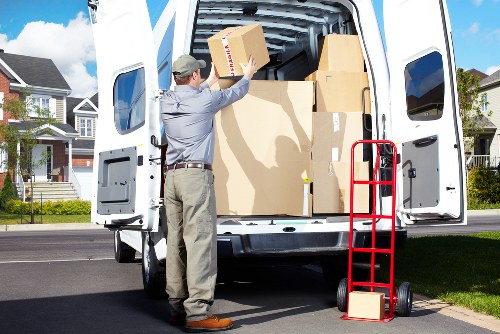
Customers often ask what is actually included in a commercial moving service. While every business move is different, a professional service usually covers the core tasks needed to relocate efficiently and safely. The goal is to remove guesswork and give your team a clear structure to follow.
Common inclusions may involve pre-move planning, item handling, disassembly of basic furniture, loading, transport, unloading, and placement at the new premises. Some businesses may also need help with packing support, crate use, protective wrapping, or moving items between storage and the new location. If you have unusual items, it is worth discussing them early so nothing is left until the last minute.
For many Chinatown customers, the best service is one that can work around access conditions and building instructions. That can mean coordinating elevator use, reserving loading areas where possible, and keeping the move moving in a tight urban environment. Professional movers should be able to protect floors, walls, and doorways while also protecting the items being transported.
Typical items handled during a business move
- Office desks, chairs, and meeting furniture
- Computers, monitors, printers, and office electronics
- Filing cabinets, documents, and archive boxes
- Retail shelving, stock, and display fixtures
- Kitchen and hospitality equipment
- Work tables, storage units, and backroom supplies
- Specialty equipment and fragile business items
Request a free quote if you want a move plan based on the actual items, access points, and timing requirements for your business.
How the moving process works

A well-run commercial move should follow a sensible process that keeps everyone informed. Businesses in Chinatown often prefer a clear sequence because it helps them coordinate staff, suppliers, and building access. The process can be simple, but it should not feel rushed or vague.
First comes the initial discussion, where you explain the type of business, the size of the move, the locations involved, and any access issues. This is the stage where details matter: Is there a lift? Are there stairs? Is parking limited? Are there delivery restrictions? Are there items that need special handling? The more accurate the information, the better the move can be planned.
Next comes scheduling and preparation. This might include deciding whether the move should happen after hours, before opening, or over a weekend. Many local businesses prefer lower-disruption timing, especially if they serve customers throughout the day. Once the plan is set, packing, labeling, and dismantling can begin in an orderly way.
On moving day
Moving day should feel coordinated rather than chaotic. The crew should arrive ready to protect the premises, load items efficiently, and keep the move organized. Boxes should go to the correct rooms, furniture should be placed where requested, and fragile or high-value items should be handled with extra care. If there are multiple stops, such as storage and a new site, the sequence should be planned in advance.
Finally, there is post-move placement and setup. Even when a move is complete, many businesses still need items placed correctly so staff can get back to work. That can mean positioning desks, aligning shelving, or placing stock in the right areas. A thoughtful finish matters because the goal is not just to move stuff, but to get your business functioning again.
Book your service now if you want a move that is organized from the first phone call through to the final placement of items.
Preparation checklist for Chinatown business owners
Preparation can make a major difference in how smoothly a commercial relocation goes. Even a well-organized moving crew benefits from a business that has sorted priorities ahead of time. In Chinatown, where access may be limited and time windows can be tight, preparation is especially useful.
Use the checklist below as a practical starting point. It helps reduce confusion, keeps staff aligned, and makes the move more efficient overall.
- Decide which items are moving, storing, recycling, or staying behind.
- Label boxes by department, room, or use so unloading is easier.
- Back up important digital files before moving computers or servers.
- Notify building management about lift access, loading rules, or move times.
- Measure large items and confirm they fit through doors, lifts, and corridors.
- Set aside any fragile, confidential, or high-value items for special handling.
- Tell staff what they need to pack, unplug, or clear before moving day.
- Plan how the business will operate during the transition period.
For retail and hospitality customers, it may also help to prepare a quick list of reopening essentials, such as payment devices, signage, stock rotation items, menus, or point-of-sale accessories. This can help you get back to normal faster after the relocation.
Underlining the importance of preparation: the more organized your business is before the move, the less downtime you are likely to face afterward. That is why many clients value a moving team that can also talk through the practical steps in advance.
Pricing factors for commercial moves in Chinatown
Customers often want to know what influences the cost of a commercial move. While exact pricing depends on the job, there are common factors that usually shape the final quote. Understanding these can help businesses compare services more fairly and avoid surprises.
One major factor is the volume of items. A small office with a few desks and boxes will take less time and labor than a multi-room retail or hospitality relocation. The types of items matter too. Heavy furniture, fragile electronics, specialist equipment, and awkward fixtures can require extra care and more time.
Access conditions are another important factor in Chinatown. Tight streets, loading restrictions, stair access, narrow corridors, and limited parking can all affect how a move is carried out. If a crew needs to spend longer loading or unloading because of access limitations, that can influence the overall estimate.
Other factors that may affect the quote
- Distance between the old and new premises
- Number of floors and elevator access
- Need for packing, wrapping, or disassembly
- After-hours or weekend scheduling
- Use of storage between locations
- Special handling for fragile, bulky, or sensitive items
- How much help is needed with setup at the destination
When requesting a quote, it helps to give as much detail as possible about your premises and inventory. That allows the mover to plan realistically and recommend the right level of support. For local businesses, transparency at this stage can save time later.
Why choose a local company for Chinatown commercial relocations
There are clear benefits to hiring a company that regularly works in and around Chinatown. Local knowledge matters in places where traffic patterns, parking access, and building layouts can change the pace of a move. A nearby team is often better positioned to plan for those realities before they become problems.
Local movers are also more likely to understand the pace of neighborhood businesses. Chinatown includes restaurants, grocery shops, retail outlets, offices, service providers, and mixed-use commercial properties that all have different operating hours and customer flows. A local provider can often suggest moving windows that reduce disruption and align more naturally with how the area works.
For customers based near adjoining districts, local service can also be convenient if your move includes nearby areas, shared storage, or a staged relocation. Businesses around nearby commercial corridors, transit-connected blocks, and mixed-use buildings often need flexible timing and strong communication. That is where local experience can really help.
Local advantages customers notice
Choosing a local team for commercial moves in Chinatown can offer practical advantages such as:
- Faster familiarity with building access and delivery conditions
- Better planning for urban loading and parking issues
- More flexible scheduling options for business hours
- Quicker response for short-notice or staged relocations
- Relevant experience with small, busy, or hard-to-access premises
These are not abstract benefits. They directly affect how easy your move feels and how quickly your business can resume normal operations.
Areas covered and nearby customer needs
Businesses in Chinatown often want moving support that extends beyond a single street or block. Depending on your location and the nature of your move, you may be relocating between commercial units within the district, shifting to a nearby business area, or managing a move that involves storage and return delivery.
Customers frequently come from surrounding commercial and mixed-use areas with similar access conditions, including neighboring retail strips, office clusters, and residential buildings with street-level businesses. This matters because the moving approach often needs to suit both the origin and the destination. A good plan should account for each property type rather than assuming both ends are identical.
For local companies, this flexibility can be especially helpful. Some businesses need to move into a ground-floor shopfront, while others are moving out of an upper-level office or into a shared commercial unit. A moving team that can handle varied property types will be better prepared for these transitions.
Examples of situations where local expertise helps
- Moving between nearby Chinatown commercial units
- Relocating a business into a mixed-use building
- Transporting stock from storage to a retail location
- Helping offices move into or out of upper-floor premises
- Coordinating moves around busy trading times
If your move involves more than one destination or a temporary storage arrangement, say so early. That gives the mover time to plan the route, timing, and item handling properly.
Frequently asked questions about commercial moves in Chinatown
Q: How far in advance should I book a commercial move?
It is best to book as early as you can, especially if your business needs a specific move date, after-hours scheduling, or a weekend slot. Chinatown businesses often work around building rules and busy periods, so early planning helps secure the most practical timing.
Q: Can the move be done outside normal business hours?
In many cases, yes. After-hours, early morning, or weekend moves can reduce disruption for customers and staff. This depends on the property, access rules, and the size of the relocation, so it is worth discussing during the planning stage.
Q: Do you move fragile or high-value equipment?
Most commercial moves include fragile items, but they should be identified clearly in advance. Computers, display items, specialist tools, or sensitive business equipment may need extra wrapping or specific handling instructions.
Q: What if my premises has limited parking or no loading dock?
That is common in Chinatown and should be discussed before move day. A local team can usually plan around restricted parking, tight access, or shared loading zones by adjusting timing and loading methods where possible.
Q: Can you help with furniture disassembly and reassembly?
Many commercial moves include basic disassembly and reassembly support for standard office and retail furniture. If your items are unusual or specialist, mention them in advance so the service can be planned correctly.
Q: What should I do with confidential documents?
Pack them separately, label them clearly, and keep control over who handles them. If your business has sensitive records, it is wise to create a secure handling plan before the move starts.
Q: Can I move in stages instead of all at once?
Yes, staged moves are often useful for businesses that want to keep operating during the transition. This can be especially practical for offices, retail, and hospitality businesses that need to reopen quickly.
Q: What should I ask for when requesting a quote?
Share the type of business, item list, access conditions, move date, destination details, and whether you need packing or setup help. The more accurate the information, the more useful the quote will be.
Choosing the right commercial mover for your business
Not every mover is prepared for the demands of a busy commercial district. When you are hiring help for a business relocation in Chinatown, it is worth choosing a team that can handle logistics as well as lifting. You want practical experience, clear communication, and a steady approach to managing time-sensitive jobs.
Look for a company that asks detailed questions about access, inventory, and timing. That usually means they are thinking ahead instead of treating every move the same. Good movers should be able to explain how they will protect your items, how they will handle building constraints, and what parts of the job they can assist with.
Trust also comes from clarity. You should understand what is included, what needs to be prepared, and what happens on moving day. If a team can talk through these points in a straightforward way, that is often a good sign they are prepared for real business conditions.
What customers should expect from a professional service
- Respect for your business hours and operations
- Careful handling of furniture, equipment, and stock
- Realistic planning around Chinatown access challenges
- Clear information about service scope and timing
- Support that helps you reopen or resume work faster
For many local customers, that combination of reliability and practical support is exactly what makes a move easier.
Ready to arrange your Chinatown business move?
If you are preparing for a relocation and need dependable support, now is the right time to start planning. Whether you are moving a small office, a busy shop, a hospitality space, or a larger commercial setup, a local approach can help keep everything organized. The key is to work with a team that understands the realities of the area and the pressure businesses face when they are in transition.
From access planning and item protection to scheduling and unloading, a good commercial moving service should make the process feel manageable. That is especially important in Chinatown, where limited parking, dense streets, and active commercial buildings can make timing and coordination just as important as lifting and transport.
If you are comparing options for Commercial Moves in Chinatown, take the next step now. Contact us today, request a free quote, or book your service now to get your move moving in the right direction. A well-planned relocation can save time, reduce disruption, and help your business settle into its new space with less stress.
Whether you are moving across the neighborhood or to a nearby commercial area, the right local team can make the difference between a difficult shift and an efficient one.